
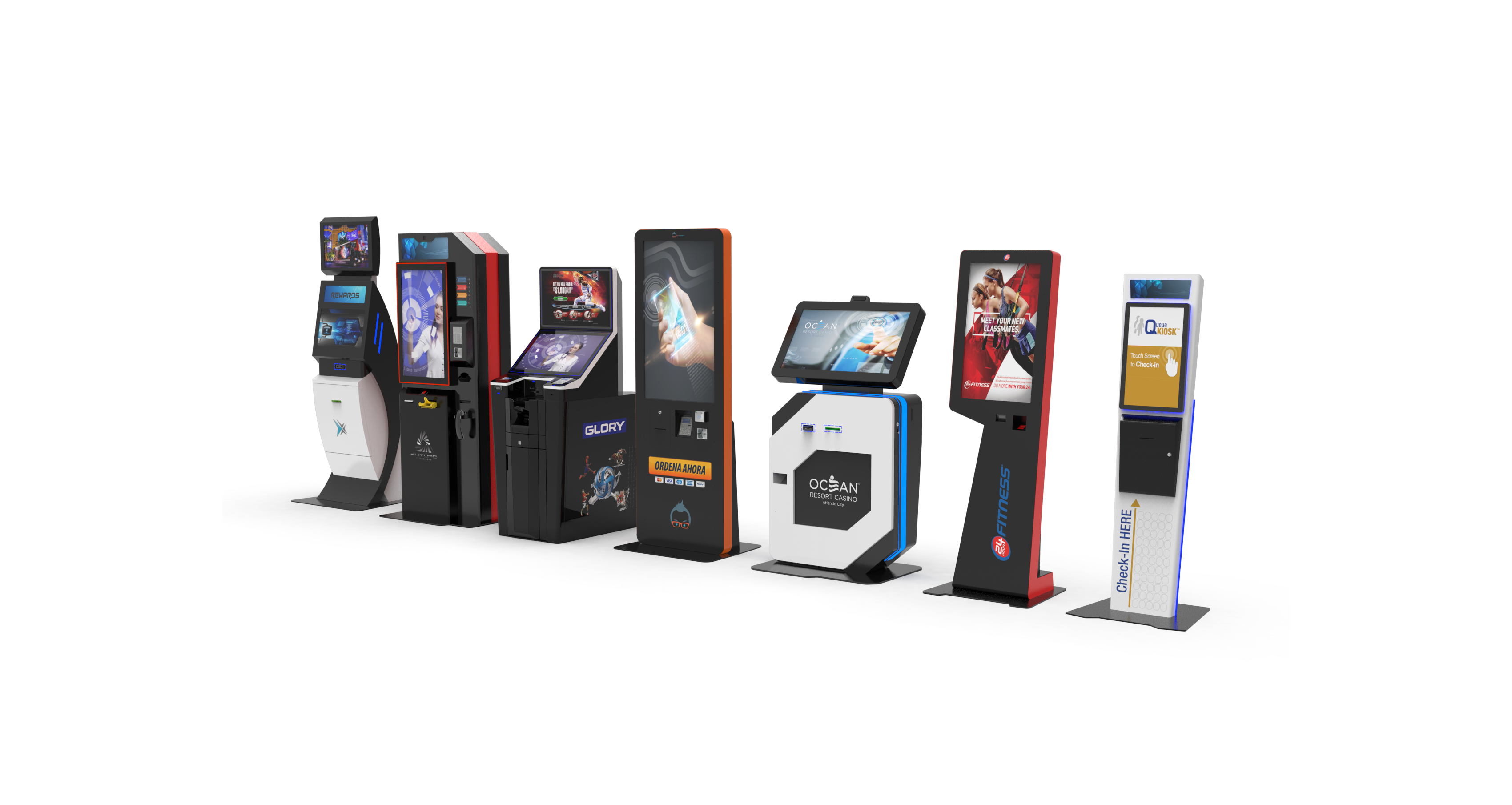
Self-service kiosks are becoming a normal part of everyday life. Whether you’re checking into a hotel, ordering food, paying a bill, or registering at a hospital, chances are you’ve interacted with one recently.
A self-service kiosk is a self-service interactive system that allows customers or users to complete tasks on their own without needing assistance from staff. Kiosks are designed to simplify common interactions and make processes faster and more efficient. Most kiosks guide users through tasks such as checking in, placing an order, making a payment, or printing tickets and receipts. The goal is to create a smooth, intuitive experience that reduces friction for both the user and the business.
At a basic level, kiosks combine both hardware and software into a single system. The hardware includes the physical structure and internal components, while the software controls the user experience.
On the hardware side, kiosks typically include:
The software layer is what guides the user step-by-step through the process. It connects to backend systems like POS platforms, reservation systems, or payment networks, allowing the kiosk to operate in real time just like a staff interaction would.
One of the biggest reasons the kiosk industry is growing so quickly is because it applies to so many different environments. Businesses across multiple industries are adopting kiosks to improve efficiency and customer flow.
You’ll commonly see kiosks used in:
As expectations around speed and convenience continue to rise, kiosks are expanding into even more use cases.
The growth of self-service kiosks isn’t just about keeping up with technology, it’s about solving real operational challenges. Businesses today are under pressure to do more with fewer resources while still delivering a strong customer experience.
Kiosks help address these challenges by improving efficiency in a few key ways:
In many cases, businesses also see increased adoption of services simply because the process becomes easier and more intuitive for users.
Not all kiosks are built the same, and this is where many businesses run into issues. While design and appearance matter, long-term success depends on how the kiosk performs over time. A well designed kiosk should be easy to use, accessible to a wide range of users, and built to handle real world conditions. It should also be reliable and easy to service, minimizing downtime and keeping operations running smoothly. What many buyers don’t realize is that the internal design, things like component layout, cooling, and service access, often plays a bigger role in performance than the exterior. A kiosk that looks good but fails in the field can quickly become a costly problem.