
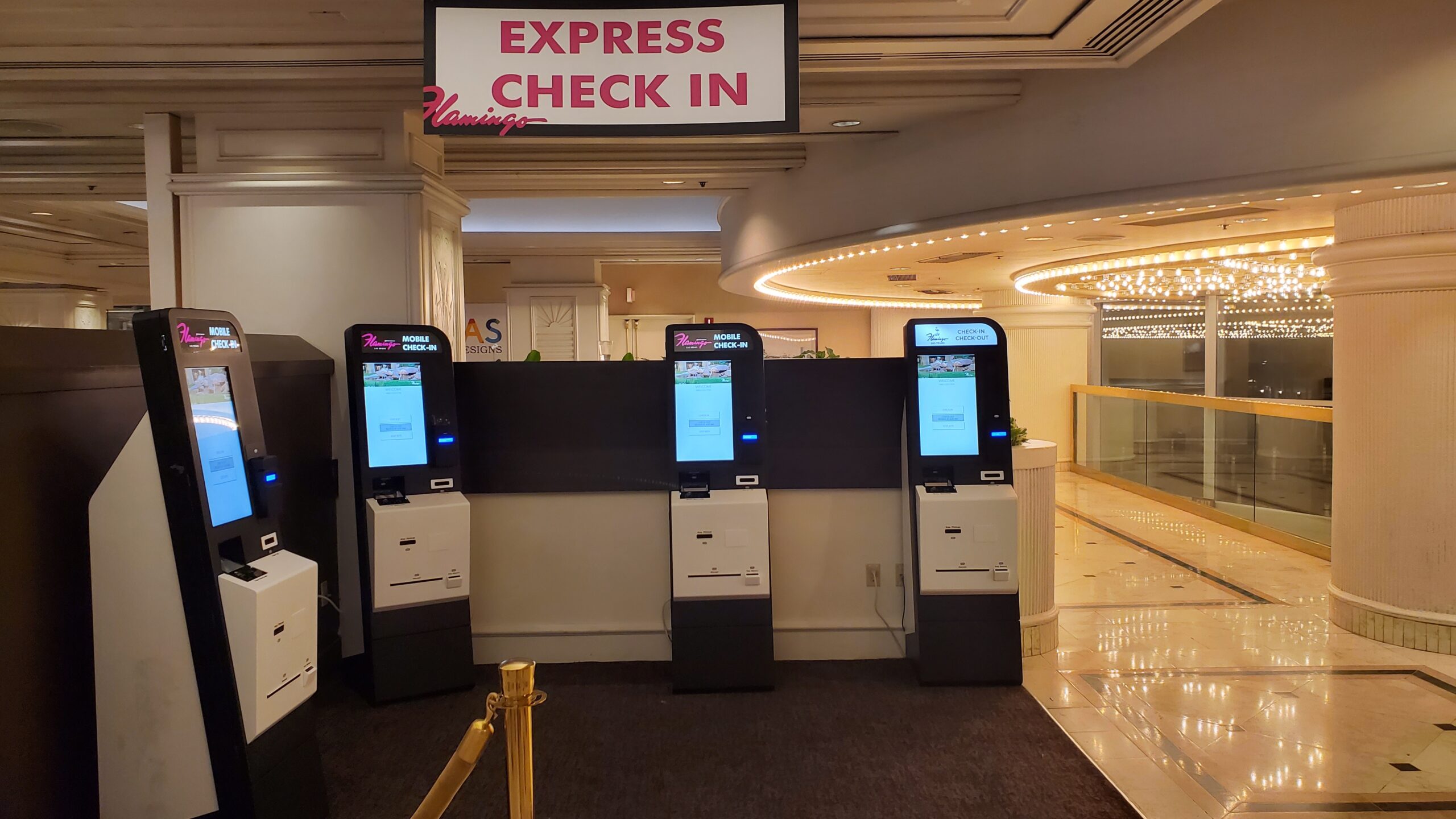
Hotels are under constant pressure to deliver faster service while managing staffing challenges, rising labor costs, and higher guest expectations. The front desk still plays an important role in hospitality, but many check-in tasks are repetitive and can slow down operations during busy arrival periods. Self-service hotel check-in kiosks help reduce that pressure by giving guests a faster way to complete routine steps such as finding a reservation, confirming details, processing payments, and receiving room keys. Instead of sending every guest through the same front desk line, kiosks create another service option that helps hotels move guests through the arrival process more efficiently.
Hotel lobbies can become crowded quickly when guests arrive at the same time. Some of the reasons this can happen are flight delays, group bookings, conferences, weddings, or late-night arrivals that suddenly create check-in rushes. These rushes are often concentrated into short windows of time rather than spread evenly throughout the day. For many hotels and resorts, the busiest periods happen during weekend arrivals, conference check-ins, wedding groups, and the standard afternoon or evening check-in window. When every guest has to wait for front desk staff, simple check-ins can take longer than they should.
A self-service kiosk helps separate routine arrivals from more complicated guest needs. Guests with straightforward reservations can check in through the kiosk while staff remains available for room changes, billing questions, special requests, loyalty support, and other situations that require staff attention. In larger hotels or resorts, multiple kiosks can also be deployed together so several guests can check in at the same time. This helps move lines faster during peak arrival periods and gives staff more control over the flow of guests through the lobby.
Self-service check-in works best when it supports hotel employees rather than replacing them. Front desk teams spend a large part of their day repeating the same steps which include looking up reservations, confirming information, taking payments, issuing keys, and explaining basic property details. When a kiosk can handle most of these routine tasks, staff can focus more on guest service. They have more time to welcome guests, answer questions, solve problems, provide recommendations, and assist travelers who need extra help.
For hotels dealing with lean staffing or high turnover, kiosks can also create a consistent check-in process. The kiosk will follow the same workflow with every guest, which helps reduce pressure on employees during busy periods. In larger deployments, one employee may be able to oversee several kiosk stations at once and only step in when a guest needs assistance. This allows staff to stay involved in the guest experience while reducing the number of repetitive transactions handled manually at the front desk.
Self-service kiosks give hotels another way to offer upgrades and additional add-on features during check-in. Guests are able to select room upgrades, parking, late check-out, breakfast deals, resort amenities, or other services depending on the property and software. This creates additional revenue without adding more work for front desk staff. Some guests are more comfortable reviewing upgrade options privately on a screen instead of being asked face to face while a line is forming behind them.
Hotel arrivals do not always happen during normal check-in hours. Guests may arrive late because of delayed flights, road trips, weather, events, or changing schedules. For properties with limited overnight staffing, late check-in can create operational complications. Self-service kiosks help support after-hour arrivals by giving guests a reliable way to complete routine check-in steps at any time. This does not eliminate the need for staff, security, or guest support, but it can reduce the number of basic transactions that need to be handled manually overnight. For guests, this creates more flexibility for arrival periods, and for hotels it creates a consistent check-in process throughout the day and night.
A hotel check-in kiosk needs to be built around the actual guest workflow. The system should be easy to use, reliable, and designed for the hotel environment. Depending on the application, the kiosk may include a touchscreen, payment terminal, ID scanner, passport reader, receipt printer, camera, barcode scanner, or room key encoder. Room key encoding is important because if a guest completes check-in at the kiosk but still has to wait at the front desk for a key, the hotel loses much of the benefit. Every self-service hotel check-in kiosk should support the full process from reservations to room key access.
The physical design of the kiosk also matters, especially when multiple kiosks are installed together. Controllable LED lighting can help guests quickly identify which kiosk is available, currently in use, or needing attention. This can reduce confusion and help move lines more efficiently during busy check-in periods. LED indicators can also help hotel staff understand the status of each kiosk without manually checking every unit. For example, lighting can show when a kiosk is available for guest use, currently in service, low on room key cards, low on printer paper, experiencing network issues, or requiring staff attention.
In addition, the physical design of a kiosk should be appropriate for the lobby, protect internal components from unauthorized access, and be easy to service. Staff or technicians may need access to reload cards, replace paper, clear jams, or maintain devices. This becomes even more important during peak check-in periods because downtime on even one kiosk can slow down guest flow. A kiosk that is difficult to service can create downtime and frustration during the moments it’s needed the most. For hotels, the kiosk should be designed for quick replenishment of room key cards, receipt paper, and other consumables so the system can stay available during busy arrival windows.
Self-service hotel check-in kiosks help hotels reduce front desk lines, support staff, improve arrival speed, and give guests more control over the check-in process. They can also help with 24/7 arrivals, reduce manual errors, support upsell opportunities, and create a more scalable operation during busy periods. In larger hotels and resorts, multiple kiosks can help process several guests at once while staff remains available to oversee the area and assist when needed.
The key is to use kiosks as part of the hotel’s service model, not as a specific replacement for hospitality staff. Workers should still be available for guests who need personal attention, while kiosks can handle the routine steps that slow down the front desk. When a kiosk is properly designed, integrated, and placed in the right area of the lobby, it becomes more than a convenience feature. These kiosks are a practical tool for improving hotel operations and creating a smoother arrival experience for guests.